Application portfolio management (APM) is the discipline of treating your applications as an investment portfolio — knowing what you have, what it costs, what value it delivers, and what to do about it.
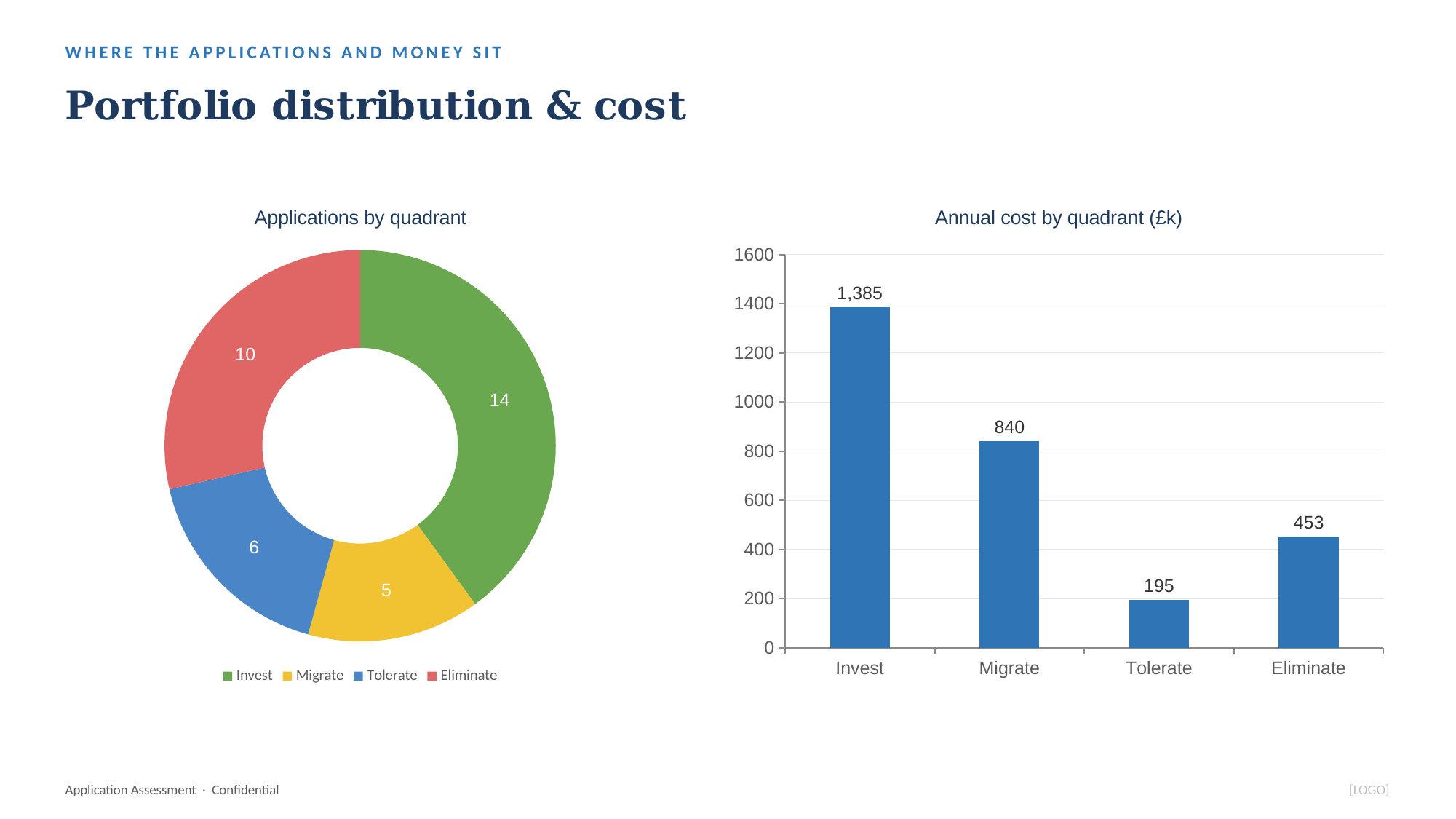
APM is the ongoing practice of inventorying, assessing and optimising the applications an organisation runs. Where a one-off rationalisation is a project, APM is the capability that keeps the estate healthy over time.
Application estates grow through projects, mergers and shadow IT until nobody has the full picture. APM restores that picture so you can cut redundant spend, reduce risk from unsupported technology, and direct investment to the applications that matter most.
Specialist APM tools are powerful but heavy. Most organisations get the majority of the value from a well-structured spreadsheet model: a scored inventory, a TIME classification, a capability map and a cost view. Start there, prove the value, then decide whether a platform is worth it.
Begin with a baseline: collect the inventory, score each app on value and technical health, place them on the TIME quadrant, and surface the quick wins — duplicate systems and unsupported technology. That first pass usually pays for the whole exercise.
The Applications Assessment & Rationalisation Toolkit gives you a ready APM starting point — a scored inventory, portfolio calculator, capability map and cost view, with a completed worked example.