Enterprise architecture (EA) is one of those terms that means different things to different people. Stripped of jargon, it's simply the practice of making sure an organisation's business, information and technology fit together and support the strategy.
Enterprise architecture is the discipline of understanding how an organisation is structured — its capabilities, information, applications and technology — and guiding how those parts change so they support the business strategy rather than working against it.
An enterprise architect connects strategy to delivery: mapping what the business does, assessing where it's strong or weak, setting standards and principles, and reviewing significant solutions so they fit the bigger picture.
Without it, organisations accumulate duplicated systems, inconsistent decisions and technology that no longer fits. Good EA reduces cost and risk and makes change faster — it's the connective tissue between what leadership wants and what gets built.
Frameworks like TOGAF give EA a common vocabulary, but you don't need to adopt everything to get value. Most practices run on a handful of repeatable methods — assessment, rationalisation, review and governance — applied consistently.
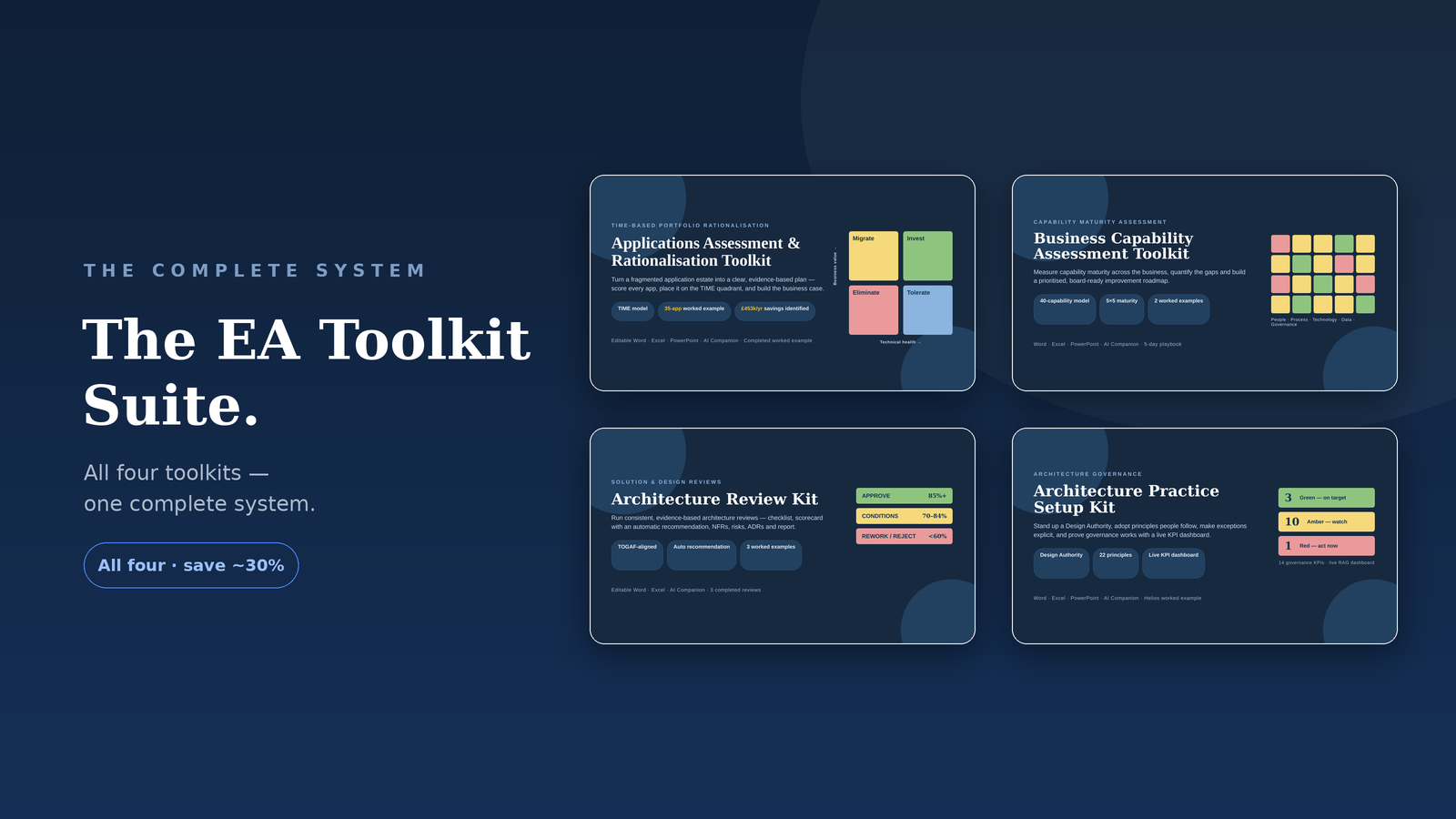
MethodVault packages these four core practices into complete, editable toolkits — assessment, rationalisation, review and governance — so you can run them without building the method from scratch.