It's much easier to build a capability model from an example than from scratch. Here's how they're typically structured and how to adapt one to your organisation.
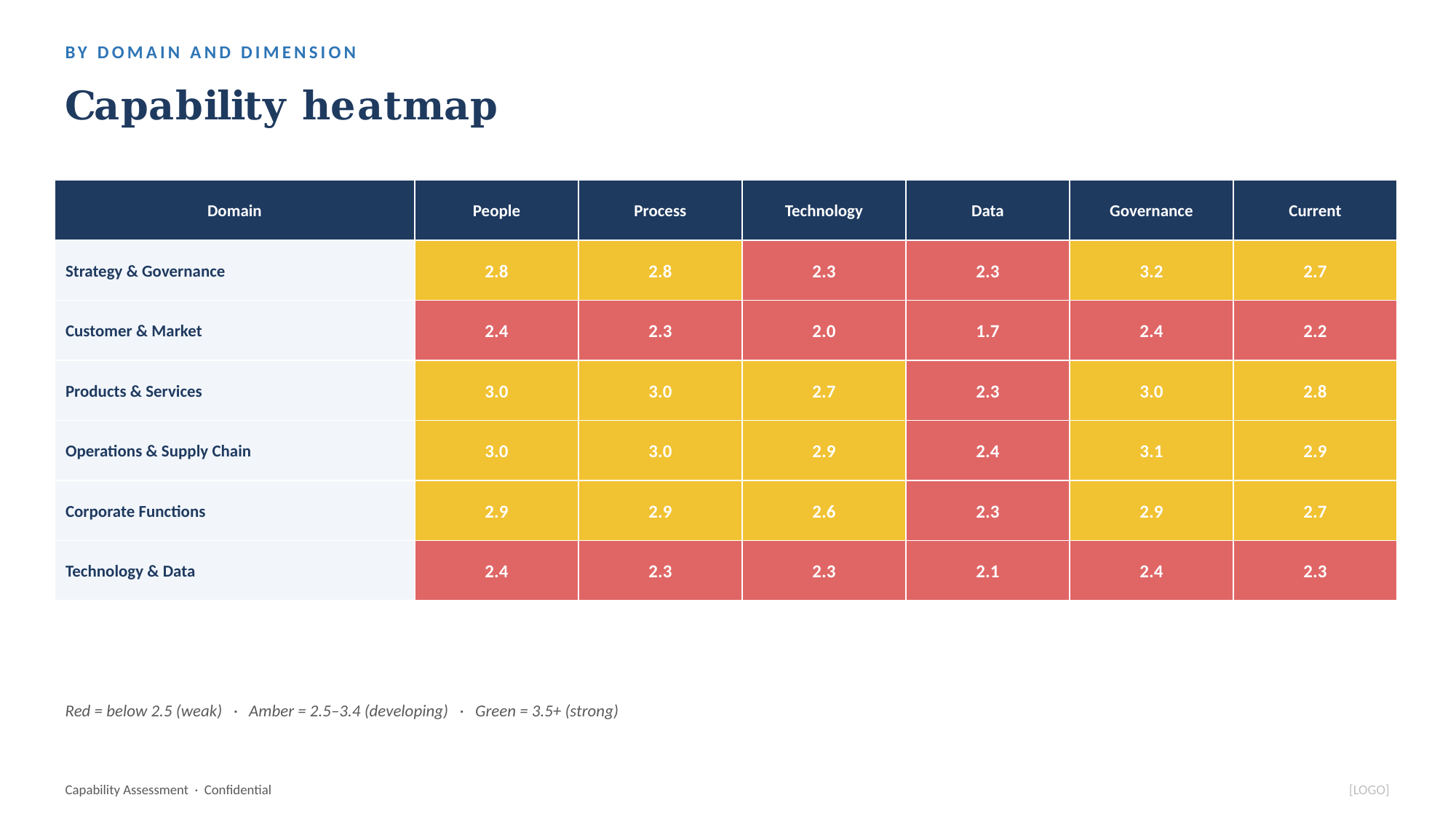
Most capability models share a similar structure: a handful of top-level domains, each decomposed into capabilities. A common set of domains looks like this:
Around 80% of capabilities are common across organisations in the same sector. Start from a reference model, keep what fits, rename to your language, and add the handful of capabilities that make your organisation distinctive.
Use noun phrases and a consistent level of granularity. Inconsistent naming ("Manage Orders" next to "Billing") is the most common reason a model feels messy.
Resist decomposing endlessly. Level 1 for the picture, level 2 for assessment, level 3 only where a capability is big enough to warrant it.
The Business Capability Assessment Toolkit ships with a 40-capability reference model across six domains — a ready example you can adapt in minutes.