What is a business capability map (and how to build one)
A business capability map is a single picture of everything an organisation does — the stable foundation for planning, assessment and investment decisions.
A capability map organises what the business does into domains.
What is a capability map?
A capability map is a structured, hierarchical list of an organisation's business capabilities, usually grouped into domains. It describes what the business does, not how it's organised or which systems it uses.
Why it's useful
It's a common language between business and IT.
It's stable — it doesn't change when you reorganise or replace a system.
It's the anchor for capability assessments, application mapping and investment planning.
How to build one
Start from a reference model rather than a blank page — most industries share a common core.
Define the top-level domains (e.g. Customer, Product, Operations, Finance, People).
Decompose each into level-2 and, where useful, level-3 capabilities.
Use clear, noun-based names ("Order Management", not "Manage Orders").
Validate with the business and stop at the level that's useful — usually two or three.
Put it to work
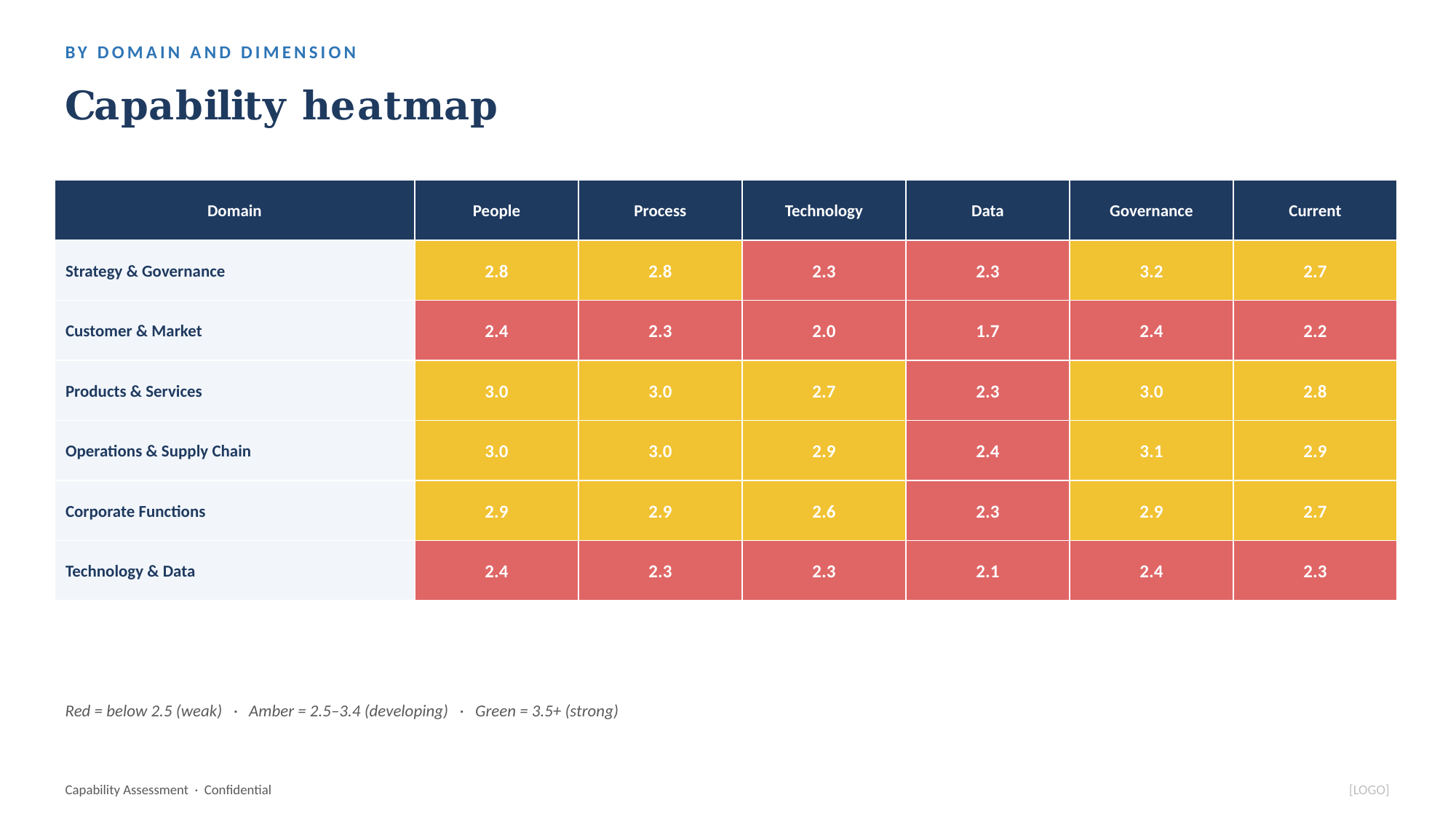
Once you have the map, use it: assess maturity per capability, map applications to it to expose duplication, and prioritise investment against it.
Start from a ready model
The Business Capability Assessment Toolkit includes a 40-capability reference model across six domains you can tailor, plus everything to assess maturity against it.