Architecture principles: examples and how to write them
Architecture principles are the shared rules that guide design decisions across an organisation. Written well, they make hundreds of small decisions easier; written badly, they're wall art nobody reads.
A principles catalogue people actually reference.
What is an architecture principle?
A principle is a durable, general rule that guides architecture decisions — a statement of intent that helps teams choose consistently without escalating everything.
What good ones look like
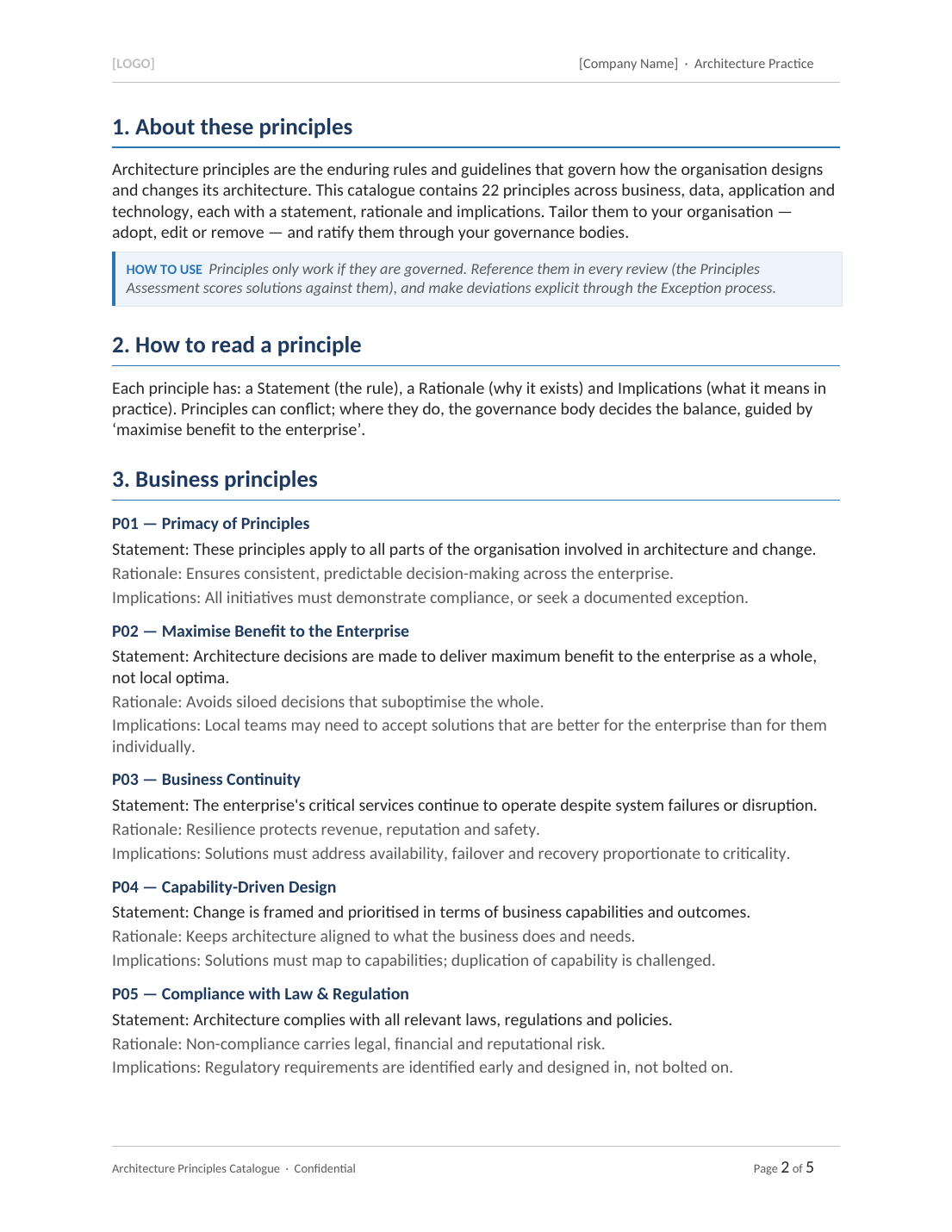
Each principle should have a clear statement, a rationale, and implications. Examples:
Buy before build — prefer proven products over bespoke development unless there's a clear differentiating reason.
Data is an asset — data is owned, governed and shared, not locked in silos.
Design for change — favour loosely coupled, standards-based solutions.
Secure by design — security and privacy are built in, not bolted on.
How to write them
Keep the set small — 10 to 20, not 100.
State each as a clear rule, then give the rationale and implications.
Make them actionable enough to settle real design debates.
Avoid motherhood statements nobody would ever disagree with.
Make them stick
Principles only matter if they're used. Reference them in reviews, check adherence periodically, and treat deviations through a proper exception process.
Start from a ready catalogue
The Architecture Practice Setup Kit includes an architecture principles catalogue and a principles assessment, so you can adopt and measure adherence from day one.