Home/Resources/Design Authority

Guide · Architecture governance

How to set up an architecture design authority

An Architecture Design Authority is the body that keeps architecture decisions consistent and accountable. Set it up well and it enables delivery; set it up badly and it becomes a bottleneck everyone routes around.
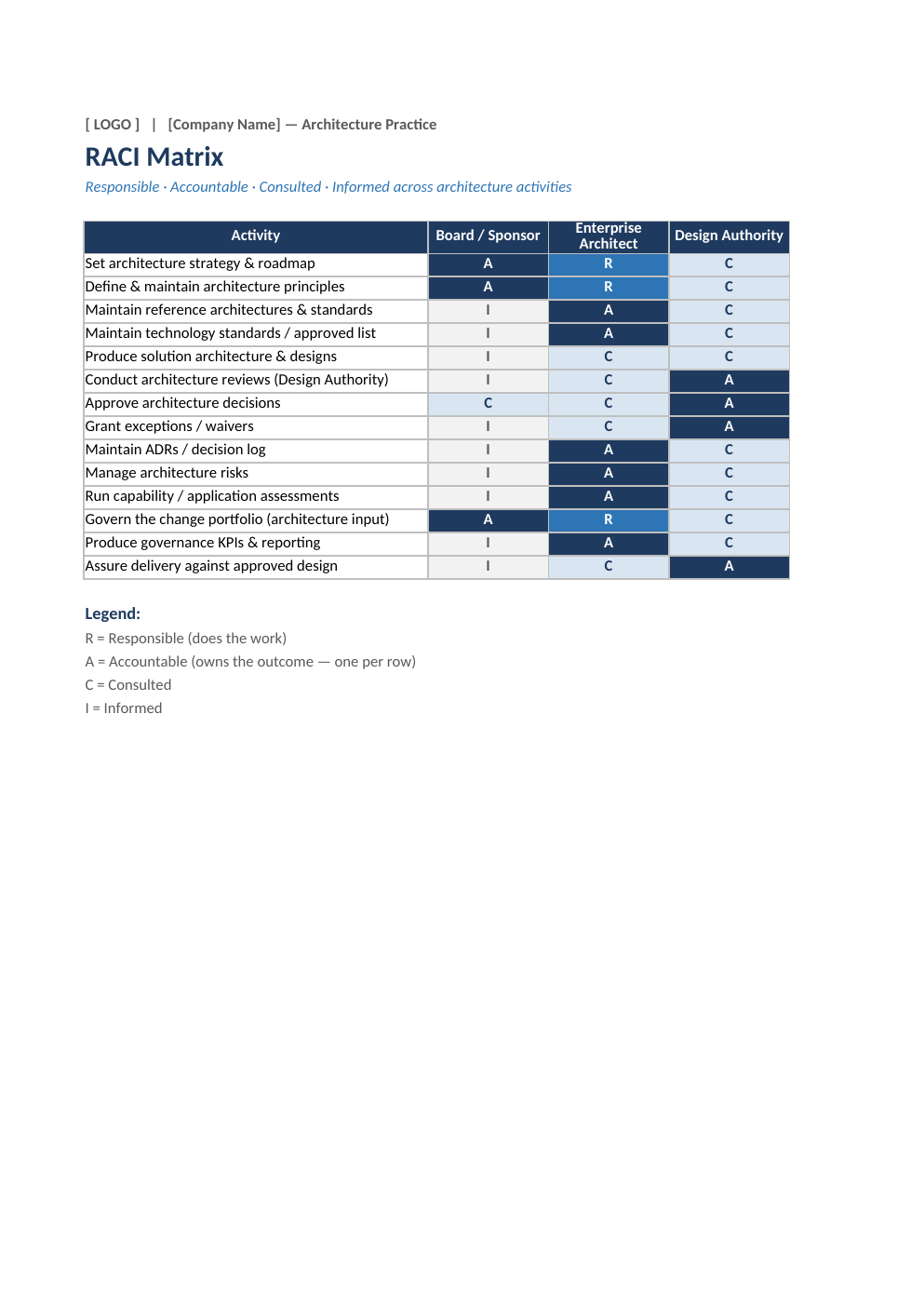
A decision rights and RACI matrix for a design authority
Clear decision rights are what make a design authority work.

What a design authority does

An Architecture Design Authority is the standing body that reviews significant design decisions and either approves them, conditions them, or sends them back. It exists so that decisions with organisation-wide consequences are not made unilaterally inside a single programme.

Its remit should be narrow and explicit. A design authority that reviews everything becomes a queue; one that reviews only what genuinely crosses boundaries stays useful. The useful scope is decisions that commit the organisation beyond the programme making them — new technology, cross-domain data, significant spend, external exposure, or anything deviating from an agreed standard.

Terms of reference

Write these down before the first meeting. The arguments you avoid later are worth the hour it takes.

Membership and cadence

Small enough to decide. A chair with genuine authority — usually the Head of Architecture or Chief Architect. Domain architects covering security, data, integration and infrastructure. A business representative who understands the outcomes at stake. The presenting solution architect attends for their item only.

Six to eight core members is the working range. Beyond that, the session becomes a briefing and the real decision happens somewhere else afterwards.

On cadence: fortnightly suits most organisations. Weekly creates administrative load and half-empty agendas; monthly makes the authority a bottleneck, because a project that misses a slot waits a month and will simply proceed instead. Whatever the cadence, run an out-of-cycle route for genuine urgency — otherwise urgency becomes the reason to bypass you.

Decision rights

The design authority should not be the only decision-maker. Define a tiered model:

LevelDecidesExamples
Solution architectWithin-solution choices conforming to standardsComponent design, patterns already approved
Domain architectDomain-specific choices, minor deviationsIntegration pattern selection, data model change
Design authorityCross-domain, novel, high-spend, deviationsNew technology, platform selection, standard exceptions
Executive / investment boardStrategic commitment and fundingMajor platform strategy, multi-year direction

Every decision pushed down a level is capacity returned to the authority for the decisions that genuinely need it.

Running a session that works

Circulate packs 48 hours ahead and hold the line on it — reviewing material for the first time in the room produces uninformed challenge and defensive presenters. Open with open conditions from previous sessions before any new business; this single habit is what stops conditions being quietly forgotten.

Keep presentation short and challenge long. Ten minutes of context, thirty of questions. Record the decision and the reasoning in the same session, not afterwards from memory. Significant decisions should become ADRs.

Make it enable, not obstruct

The authority earns its standing by being useful, not by having power. Publish the calendar and thresholds so teams can plan around it. Commit to a decision turnaround and meet it. Offer early informal input before formal submission — most rework is avoidable if an architect can sound out an approach three weeks earlier.

And accept that a design authority which never rejects anything has no value, while one that rejects frequently has a scoping problem. If most submissions need rework, the standards are not clear enough upstream — that is a signal about your principles, not about the projects.

Stand it up with the kit

The Architecture Practice Setup Kit includes a Design Authority terms of reference, meeting guide, and a decision-rights & RACI — plus the whole governance operating model.

View the toolkit →